By clicking “Accept All Cookies”, you agree to the storing of cookies on your device to enhance site navigation, analyze site usage, and assist in our marketing efforts. View our Privacy Policy for more information.
The Strong Mind Project Blog 1: The Workout Ends...But Your Brain Keeps Benefiting
The Strong Mind Project Blog 1: The Workout Ends...But Your Brain Keeps Benefiting
By
August 5, 2026
Related

"Take care of your body. It's the only place you have to live." — Jim Rohn
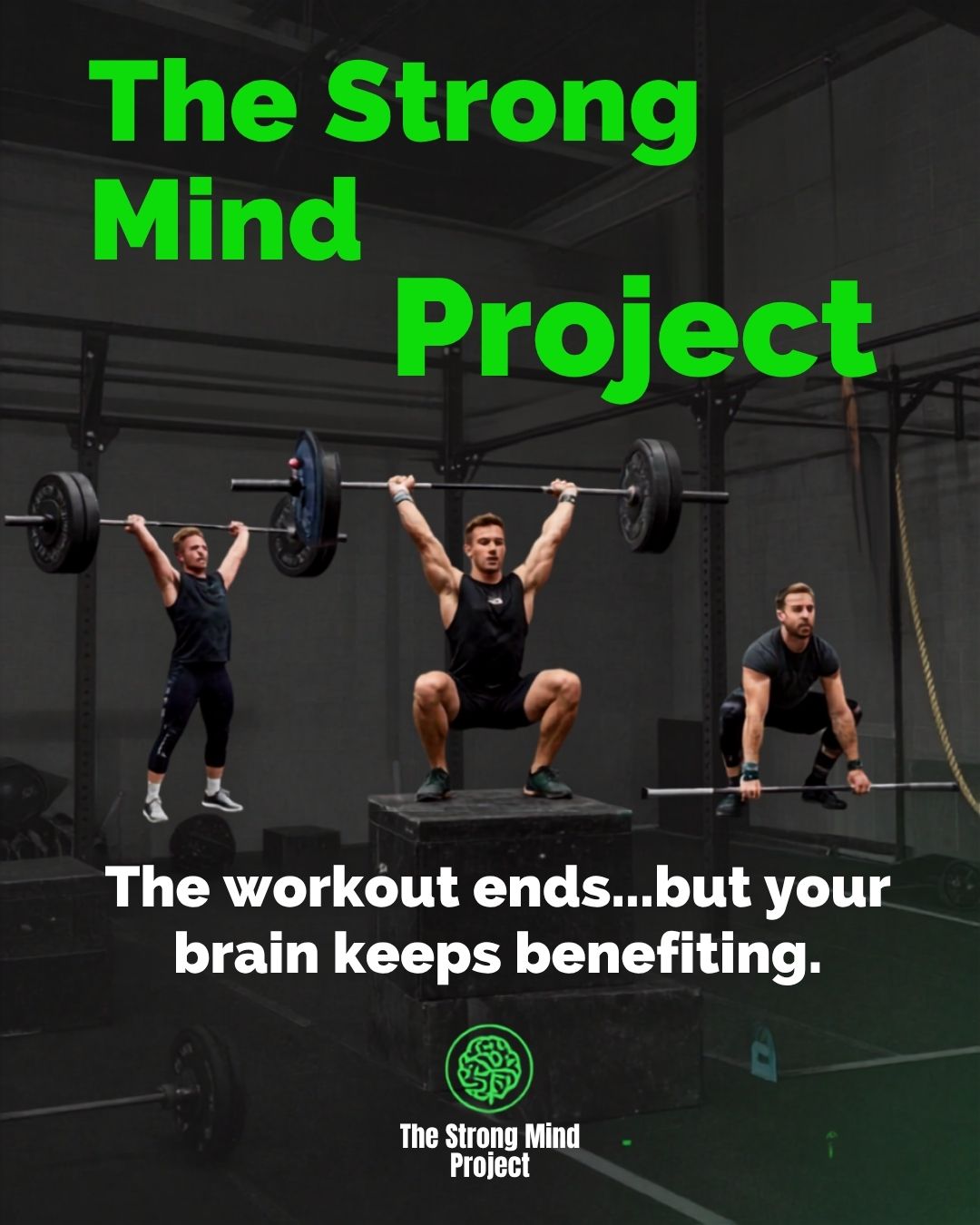
When most people think about CrossFit, they think about becoming stronger, losing weight, or improving endurance. Those are all wonderful benefits, but they are only part of the story. Some of the greatest transformations happen where no one can see them—in your brain. Every workout sends a message to your body that you are investing in your health, but it also sends a message to your mind that you are capable, resilient, and growing. While muscles may recover after a workout, the positive effects on your brain continue long after you've left the gym.
Your brain is the command center for your entire body. It controls every heartbeat, every breath, every movement, every emotion, every memory, and every decision you make. Every muscle contraction begins with a signal from your brain traveling through your nervous system. Because of this incredible connection, taking care of your brain is just as important as taking care of your body. The amazing part is that every time you exercise, you're doing both.
CrossFit is especially beneficial because it challenges both your body and your brain. Learning new movements, practicing technique, improving balance, coordinating different lifts, and adapting to constantly varied workouts all require your brain to build new neural pathways. These pathways allow your brain to communicate more efficiently with your body, improving coordination, reaction time, balance, memory, and problem-solving skills. In other words, every workout is strengthening your brain just as much as your muscles.
One of the greatest challenges many of us face today isn't physical—it's mental. Our lives are filled with constant notifications, deadlines, financial pressures, family responsibilities, and countless daily decisions. Unlike our ancestors, whose stress came from immediate dangers that quickly passed, today's stress rarely shuts off. Our brains often can't tell the difference between escaping a dangerous situation and sitting in traffic, paying bills, or juggling work and family. As a result, many people spend much of their lives living in what is commonly called fight-or-flight mode.
This response is controlled by the sympathetic nervous system. When activated, your body releases stress hormones like cortisol and adrenaline, increasing your heart rate, blood pressure, and alertness to prepare you for action. While this response is incredibly useful during emergencies, it becomes harmful when it remains activated day after day. Living in a constant state of stress can contribute to anxiety, poor sleep, brain fog, elevated blood pressure, chronic inflammation, fatigue, weakened immunity, and even difficulty losing weight.
Exercise provides one of the healthiest ways to interrupt that cycle. During physical activity, your body eventually begins shifting away from the sympathetic nervous system and activates the parasympathetic nervous system, often called the "rest and digest" system. This is the part of your nervous system responsible for slowing your heart rate, lowering blood pressure, improving digestion, reducing stress, and promoting recovery. Many people leave the gym feeling calmer than when they arrived because their nervous system has literally begun resetting itself.
At the same time, exercise creates a remarkable chemical response inside the brain. As you move, your brain releases endorphins, often called your body's natural pain relievers. These chemicals help reduce discomfort while creating feelings of happiness and well-being. It's one reason many people describe leaving a workout feeling lighter, happier, or less overwhelmed than when they walked in.
Exercise also increases the release of dopamine, often referred to as the brain's reward chemical. Dopamine plays an important role in motivation, learning, and developing healthy habits. Every completed workout, every new personal record, and every goal accomplished reinforces your brain's reward system, making you more likely to return and continue building positive habits.
Another important neurotransmitter influenced by exercise is serotonin, which helps regulate mood, emotional stability, and sleep. Healthy serotonin levels are associated with lower levels of anxiety and depression while supporting an overall sense of well-being. Regular physical activity has consistently been shown to support healthier serotonin function, which helps explain why so many people report feeling emotionally better after exercising.
Exercise also increases norepinephrine, a chemical that improves attention, concentration, and mental alertness. Have you ever noticed that after a morning workout your mind feels clearer and you're more productive throughout the day? That's not just because you've accomplished something—it's because your brain is functioning more efficiently.
Perhaps one of the most exciting discoveries in neuroscience is a protein called Brain-Derived Neurotrophic Factor (BDNF). Scientists often describe BDNF as "fertilizer for the brain" because it helps grow new brain cells while strengthening the connections between existing ones. Higher levels of BDNF are associated with improved memory, faster learning, greater cognitive function, and protection against age-related decline. Every workout is quite literally helping your brain become stronger and more adaptable.
As we age, maintaining brain health becomes increasingly important. While aging is inevitable, cognitive decline doesn't have to be. Research continues to show that regular exercise supports memory, balance, coordination, reaction time, and overall brain function throughout life. Physical activity also helps reduce inflammation, improves blood flow to the brain, and supports healthy hormone regulation, all of which contribute to maintaining independence and quality of life for years to come.
One of the greatest transformations we witness at Starr Village CrossFit isn't measured by the number on a scale or the amount of weight someone lifts. It's the confidence people develop along the way. Confidence isn't built because someone suddenly becomes stronger or faster. It's built because they prove to themselves, one workout at a time, that they can do hard things. They show up when they don't feel like it. They learn new skills. They overcome obstacles. They accomplish things they never thought were possible. Those victories don't stay inside the gym—they carry into work, parenting, relationships, and everyday life.
It's interesting that many people join a gym because they want to change how they look. Yet if you ask long-term members why they continue coming back, very few will mention appearance first. Instead, they'll tell you they sleep better. They have more energy. They think more clearly. They handle stress differently. They're happier. They've made friendships. They've found a supportive community. They simply feel better.
The workout may last only an hour, but the benefits continue throughout the day—and over the course of a lifetime.
More Than Muscle: Confidence
Confidence isn't something you have before you begin.
It's something you build every time you choose to show up, embrace a challenge, and keep moving forward.
Every workout is another promise you keep to yourself.
Because CrossFit builds more than muscle.
It builds confidence.